Pages

Showing posts with label Operations Management. Show all posts

Wednesday, November 11, 2015

Peer Reviews

You may think your operation is going great with only a few tweaks here and there to keep it going.  Or worse you may be under the illusion, the operation is fine and you want to spend your time looking at more emergent issues.  Still you might even be at a loss to how to improve your operation to begin with.  For these reasons you need a peer review.


(Courtesy aaemrsa.blogspot.com)


A peer review is nothing more than having fresh sets of eyes review your process and provide constructive (hopefully) feedback which you can use to improve your business.  For a large company it is easy to do this since it is likely there are other internal groups that perform the same task.  It is easy to set up since companies always like their employees to help each other.

For a smaller company, you may have to reach out to a similar size company in the same type of industry (i.e. IT, manufacturing, health care, etc).  Of course you won't look towards a competitor but a company that has successfully solved similar issues in the past.  

Set up a two or three day review of what aspect of your operation needs help.  It's best to have older experienced reviewers who have a wealth of experience that can help guide you.  Invite them over to your place of business and use a catered lunch as incentive!  Once they arrive have a kickoff meeting to let everyone know what the objectives are.  If you carefully select the right people to review your operation, then the feedback will be invaluable.

You can escort them around the factory or let them explore on their own.  After the designated review time is complete, the reviewers should be happy to share their observations.  It may be difficult to listen to problems they may identify, but remember it is in the best interest of your company to improve. Sometimes it takes someone not so close to the business to improve it.


Peer reviews are essential in any operations
(Courtesy www.employeereview.com)


Friday, August 14, 2015

Just-in-time

One of the best ideas to come out of operations management is the concept of just-in-time (JIT) production.  As most know it is the idea that whatever your operation is waiting for (raw materials, finished product, etc.), it will be there right when you need it.  This avoids keeping a large inventory of items on hand which must be kept track of.  With careful planning a just-in-time system will give you exactly what you want exactly when you need it.

(Courtesy www.planproduction.tripod.com)


Of course it doesn't always work that way.  It has been my experience that some products will invariably be delayed to the downstream user because of raw material shortages, errors in production, having other work "out prioritize" your work.  Instead of a just-in-time system, you know have a "just-in-turmoil" system.  With one delay in the pipeline the rest of the operation must now work overtime to catch up.  Literally work overtime as in a 24/7 type of rescue.

The best approach is to have the parts or materials arrive a little before "just-in-time" so there is a a little safety buffer.  It may mean stacking parts in side areas a few days before you need them. This may be uncomfortable, but will keep your operation flowing smoothly.


(Courtesy: www.elblogsalmon.com)

Monday, August 10, 2015

Rapid Prototyping

Rapid Prototyping serves a fantastic role in the product or service design stage within operations.  Historically a designer would do the best job possible in identifying areas of concern prior to releasing a design to be fabricated.  Once the design was released it usually went into fabrication and (with fingers crossed) everything went well.  If not there would be a revision to the design and the process started over and more finger crossing.

With the advent of rapid prototyping, it was easy and fast to create a first look at a design before it went into production.  All the designer has to to is send a 3D CAD model to the prototyping shop.  Then the programmers would write the program and have the part "built", often using stereolithography to produce it.  Then the part can be inspected by all concerned parties and any modifications can be done quickly.  This means it can then be implemented quickly in time to support a tight production schedule.

During my time at Boeing, I was fortunate to have visited the rapid prototyping shop in South Seattle.  They could take any complex design and fabricate it to reveal what the part would look like.  It was fast and the results were amazing.


These two chess pieces were made at a rapid prototyping shop.  The grey piece made from a steel alloy and the red piece is made from a plastic.  Notice the detail on the close up of the red piece below.


The popularity of 3D printing may eventually take the place of a prototype shop.  But until everone has a 3D printer, it is worth the time to use a rapid prototype shop to prevent design delays during a critical part of the operations flow.

Wednesday, August 5, 2015

Plant Audits

Arriving at a supplier's plant to audit the operations process is an activity that causes much anxiety for the supplier (at least the first couple of times).  Generally it is done when there are problems identified in the flow of operations.  There may be office related (i.e. engineering) or  production related (i.e. manufacturing).  Both areas must be addressed.


(Courtesy: www.pooltechservices.co.uk)


An engineering audit may uncover errors in design.  I have audited several supplier's while working at Boeing.  One supplier had a different type of CAD software than Boeing was using (that in itself was a problem).  This particular supplier had several issues with the 3D models that the Boeing team helped uncover that might have been missed if not for the audit.

All specifications and inspection criteria must clearly be flowed down from the prime contractor to the supplier.  I saw this issue happen during the same audit trip and this time it was Boeing's fault that the correct specifications were not imparted to the supplier.

It's also valuable to ensure that the supplier's engineering team is in sync with its manufacturing team. You can usually tell how this relationship is going during a kickoff meeting day one of your plant visit.  If relations between the two appear distant or aloof, then there is trouble.

For the manufacturing side, all aspects of the process are reviewed.  Do the machines break down often?  If the break, how long is the downtime?  Are the mechanics and machine operators properly trained?  What are the specific training plans for each operation?  Is the layout of the plant optimized?  All questions that need answers.  And that is just the start.

Some people are afraid to respectfully challenge the supplier.  During my audit trip, one of my fellow Boeing engineers continually challenged the supplier about all aspects of production.  He did it in a polite but assertive manner.  But the supplier eventually got tired of him and later told him he was not welcome back to the supplier's plant.  That engineer eventually became a Boeing manager because he embraced due diligence in seeking to make the operation more efficient.


Typical Supplier Manufacturing Plant - courtesy www.logicpol.com)


Sunday, August 2, 2015

Real World Use of Statistical Process Control (SPC)


(Courtesy: wallpapers-xs.blogspot.com)


If you read many books on lean six sigma, you quickly realize that much of the focus is on data collection and analysis.  If you are like me you wonder if there are any real world applications and how can using the data collection techniques improve a process.

Early on in my earlier life as a design engineer at Boeing, I was part looking into a tolerance study of stringers on the B-2 bomber program.  These stringers were attached inside the wing and serve to transfer load from the wing skin to the underlying frames and ribs.  There were issues with the location of the stringers being out of position and our engineering group sought to determine why the stringers were out of position.


A generic configuration showing the long slender stringers as they sit in a wing box - courtesy of avcom.co,za 


We took location measurements of where the stringers were actually resting on the wings stored in the factory.  We then used the +/- tolerances as the upper control limits.  We then gathered data and plotted the stringer locations as measured to try to determine if there were any significant common trends (i.e. at a particular stinger number, at  certain coordinates in a wing, etc.)

Unfortunately I left that group shortly thereafter and I lost track of the final outcome.  At that time six sigma was not nearly as accepted as today, so I don't think we even knew what else to do and how to go into much greater analysis.  But I gained a quick indoctrination into six sigma and know it can show how to improve a process or product if used effectively.


Thursday, July 30, 2015

Continuity of Manufacturing


In all operations it is essential that the shop personnel ("mechanics") manufacturing the product are capable and skilled.  Not all jobs require the same skill level and some mechanics are better in some areas than others.  A world class company recognizes that it is foolish to rely on someone whose skill is marginal at a particular task.  To ensure success, there are mentoring and training done for newer mechanics to get them up to speed and perform at efficient levels. Over time the mechanics will understand their particular job thoroughly and will excel at it with the help of fellow mechanics and engineers. Over time all people involved in the operation will have an understanding about how things should be done.

But what about when a newer mechanic is assigned to a new position in the factory and he (or she) sees things differently.  In my experience at Boeing a new mechanic may offer good tips but may also cause some disruption.  If he interprets an engineering drawing differently than his predecessors, than that may cause a halt in production while things get sorted out,  Occasionally an unplanned drawing revision may be required in order to clear up or avoid further confusion to the intent and outcome of the operation.


Coil drawing courtesy of picsbox.biz

Its important for engineering and manufacturing to work together to keep continuity.  Weekly meetings to keep communication open will to wonders to avoid bigger headaches at times when the work must be completed ASAP in order to meet schedule.

Monday, July 27, 2015

Technology in Operations

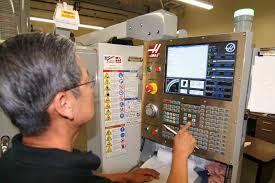
The importance of technology in operations cannot be overstated.  Now the norm rather than the exception, numerically controlled (NC) machines can consistently produce complex designs  in fractions of time that a person (or two) can complete the job.

Typical machining operation


NC machining has it's challenges.  An NC operation must be defined by an NC programmer.  It is is paramount that the NC programmer be sufficiently skilled and experienced to accurately program the correct steps required to complete the task.  A thorough check (and possibly trial machining pass) be performed prior to working on a production part.  In my time at Boeing there were several instances where the NC program erred and cost valuable time and money.  One such instance involved a composite tape-laying machine that was incorrectly programmed.  The head of the machine drove into a composite wing and created a gouge 0.5 inch deep.  Repairing the panel required many hours (and significant financial resources) to bring the wing back to conformance.

There are also other issues.  Obviously machines break down occasionally due to high usage.  A good maintenance plan will eliminate most problems.  But when a machine breaks down, it's best to have a qualified and available person(s) available to fix the issue.  This is a good argument for owning an older model machine and not the latest version.  There is a lot of history and knowledge with older machines and this helps speed the repair process if outside consultation is required.

Of course an operation needs qualified machinists/operators to run the machine.  More importantly the machinist has to know at a moment's notice to stop the machine if something appears wrong.  Bringing new people on board to an operation should include a transition where the experienced operator will help guide the new operator through the process.


Manual NC programming


Thursday, July 23, 2015

Importance of 5S in Operations

 The 5S system of organization developed by the Japanese consists of 5 steps all starting with the letter "S":


        1. Sort 
        2. Systematic Arrangement ("Set")
        3. Shine ("Sweep")
        4. Standardize
        5. Sustain


 A great explanation can be found on Wikipedia along with other websites:

5S methodology from Wikipedia


I used this system when I worked at Boeing and saw how efficiently it improved operations. (I put the quotation marks around the terms as I used them at Boeing).  We used the 5S system both in the office and in the factory.

Using it in the office I noticed a little improvement. Many of the excess file cabinets, folders, etc. were eliminated by a "sort" and this did much to clean up the office.  However over time the other four steps were not followed consistently and the effectiveness of the 5S methodology diminished.

The factory operations had much better success.  I noticed that many of the tools used by the mechanics were mounted in boxes in easy to reach places (the "set" part of 5S).  As the tools were removed for use, you could see an outline of the tool painted in the box . Upon returning the tool, the mechanic could easily see where to put the tool  - much like placing a puzzle piece into a puzzle. This was especially valuable when many tools were being used at one time.  There was also a label describing the tool to ensure the correct tool was in its proper place. Regardless of the tool size the system was used and allowed a much more efficient operation. This is especially valuable because in building an aircraft you can't have unaccounted tools which could be left inside an airplane being assembled.


(Photo courtesy of leanblitzconsulting.com)


It didn't stop there. After each shift (and when required) the mechanics would literally "sweep" the floor and"sort" their work area of unwanted materials.  This became a regular expectation of the mechanics and helped to ensure the success of the "sustain" element of 5S.  I don't know how much the 5S system saved the factory.  But I did notice how  organized and efficient it became thanks to the mechanics would committed themselves to 5S.


Tuesday, July 21, 2015

Integrated Product Teams

Historically functional groups such as design, tooling, quality assurance, manufacturing, and others have tended to operate with their own circle.  For instance as a  design entered the functional group for evaluation, it was reviewed and then comments were passed back to the originating group (usually design).  The process iterates until everyone is pleased and then the design is moved to the next functional group and the process continues.  An extremely time-consuming process.

My best experience in avoiding this was working in an Integrated Product Team (IPT) as an engineer on the F-22 fighter program for Boeing.  In an IPT the structure is focused on a product rather than a function.  The IPT I worked in (Internal Spars) had members from design, stress, tooling, quality assurance, and manufacturing sit together to develop a superior design concurrently.  


As a design was developing, each functional member could provide immediate input to ensure the design was optimized while it was being designed rather than after the first iteration was completed.  It was a refreshing way to design a product and highlighted several benefits:


  • Decreased design time as all functional members were able to contribute while the design was being developed.  Feedback was incorporated immediately and  design was able to progress more rapidly to completion. It was immediately evident that operations would be improved by working together from the beginning.
  • Working together with other functional group members allowed me to understand what was important to them.  I had previously thought of other functional members as "them" but working in an IPT made me think of "us".
  • In an IPT I was able to understand the entire design build process as I was involved in all phases of it, not just the design process.  I have used this experience in subsequent design activities to make me a better engineer.


(Typical IPT example)


Monday, July 20, 2015

Core Competency

A major focus in operations management is core competency - where to design and build a product, or provide a service.  If a product is going to be included in a final installation or assembly, then who does that task must also be considered.  Your company must always be asking, "Can we do it better here or would a subcontractor be better for our operation?" The obvious concerns about cost, schedule, and quality are easy ones to address when looking at a subcontractor.  Other considerations are:


  • Has the subcontractor successfully performed on a contract the size of your project even with one of your competitiors?  Subcontractors are always looking for work and will tell you they can take on a bigger project - no problem.  But be wary if their facility looks small, understaffed, or too crowded with other work.   There may be no room for you.
  • For U.S. products it's best to have a subcontrator building your part in the U.S. also.  Time zone differences alone are difficult to coordinate during normal work hours and this could be troublesome if a supplier is overseas.  Certainly conversations can happen 24/7, but supporting these often leads to employee dissatisfaction.  In addition there could be some language barriers to overcome with a subcontractor headquartered in a non-English speaking country.
  • It's okay to split the design and manufacturing tasks but be careful.  A prime company and it's subcontractor must ensure the applicable software used for design, manufacture, ordering parts, etc. is compatible.  Especially for designs where non compatible versions must be sent through "translators" and can easily deliver "corrupt data" ouput incapable of being used.


Sunday, July 19, 2015

MIT for free!

Did you know you can take classes from Massachusetts Institute of Technology (MIT) for free?  It's true.  You don't have to be admitted as a full or part time student.  It's part of MIT's OpenCourseWare initiative to globally share knowledge about a wide variety of topics including business, engineering, mathematics and much more.  You won't get any academic credit from MIT for taking the course, but you can broaden your knowledge. Here is the link to the website:

http://ocw.mit.edu/courses/find-by-topic/#cat=business


There are both graduate and undergraduate course offerings available and each course syllabus outlines the structure of the class as it is taught at MIT.  For each course there are links to notes, videos, download of course materials to help facilitate the learning.  There are even links to buy the textbooks (through Amazon) and associated articles.

For Operations Management, there are 9 undergraduate courses listed, and for graduate level there are currently 55 courses available.  Many of the courses are sequential so if you really want to become an expert in a topic, it's all there.


Value Stream Mapping

One of the best methods to improving a process or operation flow is to use value stream mapping.  A value stream map is a graphical representatnion  of the work flow and all the associated inputs required to complete a specified process.  It gives you a complete picture of what is going on (which may be different than what your organization intended to happen!).  Even if you believe you have an efficient process, it's a great tool for improvement.

Here is an example of a generic value stream map:


The best way to start is to identify all the stakeholders in the process and gather them in a conference room.  Using paper and markers physically draw the process and engage all members to participate in how they see the process.  Once completed, post your new value stream map on a wall in the conference room and have everyone work to see how it can be improved.

Once the comments have been completed you will have a new, improved process guaranteed to improve flow time and lower costs. I did this several times while working at Boeing and saw significant improvements in operations.